

Understanding the Basics of Yoga
Yoga is an ancient practice that originated in India over 5,000 years ago. It involves a combination of physical postures, breathing exercises, and meditation to promote overall well-being. The word “yoga” itself comes from the Sanskrit term “yuj,” which means to yoke or unite, symbolizing the union of body, mind, and spirit. Understanding the basic principles of yoga can help you appreciate its benefits and integrate it into your daily life.
At its core, yoga is more than just a physical exercise; it is a holistic approach to health. The practice includes various styles and techniques, each with unique focuses. For instance, Hatha yoga emphasizes physical postures and breath control, while Vinyasa yoga links breath with movement in a dynamic flow. Understanding these differences can help you choose the style that best fits your goals and lifestyle.
Yoga also incorporates ethical principles known as the Yamas and Niyamas, which serve as guidelines for living a balanced and fulfilling life. These principles encourage qualities like non-violence, truthfulness, and self-discipline. By embracing these foundational elements, you can create a more mindful and purposeful yoga practice that extends beyond the mat.
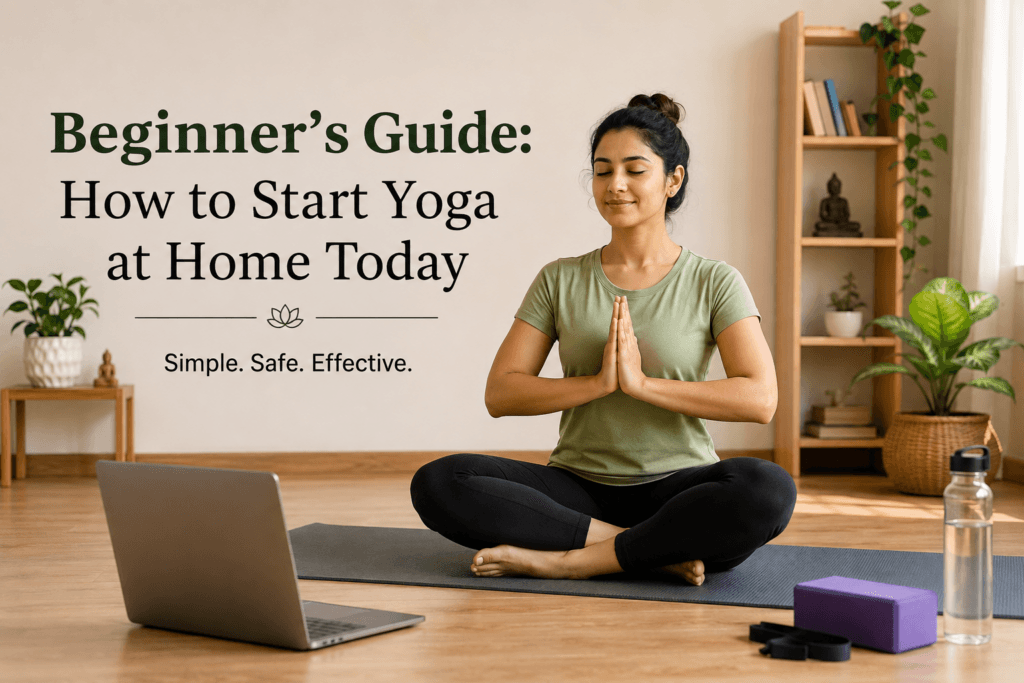
Discover the transformative journey of yoga from the comfort of your home. Our beginner’s guide simplifies the process, helping you start today!
Benefits of Practicing Yoga at Home
Practicing yoga at home offers a range of benefits that can significantly improve your quality of life. One of the most compelling advantages is the convenience it provides. You can practice at any time that fits your schedule, eliminating the need to commute to a studio. This flexibility allows you to integrate yoga into your daily routine more easily, making it a sustainable habit.
Another benefit is the comfort and privacy of your own space. Practicing at home allows you to focus on your personal journey without feeling self-conscious or comparing yourself to others. This can be particularly beneficial for beginners who might feel intimidated in a group setting. You can take your time to explore each pose, listen to your body, and progress at your own pace.
Additionally, practicing yoga at home can be a cost-effective option. Studio memberships and drop-in classes can be expensive, but practicing at home requires minimal investment. With access to a plethora of online resources, from free YouTube videos to affordable subscription services, you can find high-quality instruction without breaking the bank.
Essential Yoga Equipment for Beginners
Starting yoga at home requires minimal equipment, making it an accessible form of exercise for everyone. The most essential item is a good-quality yoga mat. A mat provides cushioning for your joints, a non-slip surface for stability, and a defined space for your practice. When choosing a mat, consider factors like thickness, material, and texture to find one that suits your needs.
Blocks and straps are also valuable tools for beginners. Yoga blocks can help you achieve proper alignment in poses by bringing the floor closer to you. They are especially useful for beginners who may not have the flexibility to reach the ground in certain poses. Straps, on the other hand, can assist in deepening stretches and maintaining proper alignment. They provide the extra length needed to reach your feet or bind your hands together in poses where your flexibility might be limited.
A bolster or cushion can also enhance your yoga practice, particularly in restorative poses or meditation. Bolsters provide support and comfort, allowing you to relax more deeply into poses. They can also be used to modify poses and make them more accessible. Investing in a few key pieces of equipment can make your home practice more enjoyable and effective.
Creating a Dedicated Yoga Space at Home
Creating a dedicated yoga space at home can enhance your practice by providing a serene and distraction-free environment. Start by choosing a quiet, uncluttered area where you can roll out your mat without interruption. This space should be large enough for you to move freely and comfortably, allowing you to stretch out in all directions.
Consider the ambiance of your yoga space. Natural light can create a calming atmosphere, so choose a room with good lighting if possible. You can also use candles or soft lighting to create a peaceful environment. Adding elements like plants, incense, or essential oils can further enhance the sensory experience, making your space more inviting.
Personalize your yoga space with items that inspire you. This could include a small altar with meaningful objects, inspirational quotes, or artwork that resonates with you. The goal is to create a space that feels sacred and nurturing, encouraging you to return to your mat regularly. By dedicating a specific area to your practice, you can establish a consistent routine and make yoga an integral part of your daily life.
Choosing the Right Yoga Style for You
With so many styles of yoga available, it can be overwhelming to know where to start. The key is to find a style that aligns with your goals and preferences. Hatha yoga is a great choice for beginners because it focuses on basic postures and breathing exercises, providing a solid foundation for your practice. It is slower-paced and allows you to learn the fundamentals of alignment and breath control.
If you’re looking for a more dynamic and physically challenging practice, Vinyasa yoga might be the right fit. Vinyasa involves fluid, continuous movements that link breath with each pose. This style is often faster-paced and can provide a cardiovascular workout while building strength and flexibility. Ashtanga yoga, another vigorous style, follows a set sequence of postures and emphasizes strength and discipline.
For those seeking a more meditative and restorative practice, Yin yoga or Restorative yoga might be ideal. Yin yoga involves holding poses for extended periods to target deep connective tissues and improve flexibility. Restorative yoga focuses on relaxation and healing, using props to support the body in restful poses. Exploring different styles can help you find the one that resonates with you and meets your needs.
Finding Online Resources and Classes
The internet offers a wealth of resources for practicing yoga at home. YouTube is a great starting point, with thousands of free videos catering to all levels and styles. Channels like Yoga with Adriene and Fightmaster Yoga offer comprehensive beginner series that guide you through the fundamentals. These videos often include modifications and variations, making them accessible to everyone.
Subscription-based platforms like Gaia, YogaGlo, and Alo Moves provide more structured programs and a wider variety of classes. These services often offer free trials, allowing you to explore different instructors and styles before committing. They also include features like progress tracking and personalized recommendations to help you stay motivated and on track.
Online yoga communities and forums can also be valuable resources. Websites like Reddit and Facebook groups offer support, advice, and inspiration from fellow practitioners. You can ask questions, share experiences, and find accountability partners to keep you motivated. By leveraging these online resources, you can access high-quality instruction and support from the comfort of your home.
Developing a Consistent Yoga Routine
Consistency is key to reaping the benefits of yoga, and developing a routine can help you stay committed. Start by setting realistic goals and determining how often you can practice. For beginners, aim for at least two to three sessions per week. As you become more comfortable, you can gradually increase the frequency and duration of your practice.
Creating a schedule can also help you stay on track. Choose specific days and times for your practice and add them to your calendar as non-negotiable appointments. Treat your yoga sessions as you would any other important commitment. This can help you prioritize your practice and make it a regular part of your routine.
Listening to your body is crucial in developing a sustainable routine. Some days you may feel energized and ready for a vigorous practice, while other days you may need a more gentle and restorative session. Be flexible and adjust your routine based on how you feel. The goal is to create a balanced practice that supports your physical, mental, and emotional well-being.
Common Mistakes to Avoid as a Beginner
Starting yoga at home can be challenging, and beginners often make common mistakes that can hinder their progress. One of the most frequent mistakes is pushing too hard and not listening to your body. Yoga is not about forcing yourself into poses or achieving perfection; it is about finding balance and harmony. Pay attention to your body’s signals and modify poses as needed to avoid injury.
Another common mistake is neglecting the importance of breath. Breath is a fundamental aspect of yoga, and proper breath control can enhance your practice. Focus on synchronizing your breath with your movements and use your breath to deepen stretches and maintain balance. Practicing pranayama, or breath control exercises, can also help you develop a stronger connection between breath and movement.
Skipping warm-ups and cool-downs is another mistake beginners often make. Taking the time to warm up your muscles and joints before diving into more challenging poses can prevent injuries and improve your performance. Similarly, cooling down with gentle stretches and relaxation can help your body recover and integrate the benefits of your practice. Incorporating these elements into your routine can enhance your overall experience.
Tips for Staying Motivated in Your Home Practice
Maintaining motivation for a home yoga practice can be challenging, especially when life gets busy. One effective strategy is to set specific, achievable goals. Whether it’s mastering a particular pose, increasing your flexibility, or practicing for a certain number of days in a row, having clear goals can give you something to work towards and keep you motivated.
Tracking your progress can also be a powerful motivator. Keep a journal to document your practice, noting how you feel before and after each session, any challenges you faced, and any progress you made. Reflecting on your journey can help you see how far you’ve come and remind you of the benefits you’re experiencing. You can also use apps or online tools to track your practice and celebrate milestones.
Finding a community or accountability partner can provide additional support and motivation. Join online yoga groups, participate in challenges, or find a friend to practice with, even virtually. Sharing your experiences, successes, and struggles with others can create a sense of connection and encouragement. By staying engaged and connected, you can maintain your enthusiasm and commitment to your practice.
Conclusion: Embrace Your Yoga Journey at Home
Starting a yoga practice at home can be a transformative experience, offering numerous physical, mental, and emotional benefits. By understanding the basics of yoga, choosing the right style, and creating a dedicated space, you can build a practice that fits your lifestyle and goals. Utilizing online resources and developing a consistent routine can help you stay committed and make progress over time.
Remember that yoga is a personal journey, and there is no right or wrong way to practice. Listen to your body, be patient with yourself, and embrace the process. Avoid common mistakes by focusing on breath, warming up, and cooling down properly. Stay motivated by setting goals, tracking your progress, and connecting with a supportive community.
As you embark on your yoga journey at home, know that each step you take brings you closer to a more balanced, harmonious, and fulfilling life. Embrace the practice with an open heart and mind, and allow it to guide you towards greater well-being. Your yoga mat is a space for exploration, growth, and self-discovery—so unroll it, take a deep breath, and begin your practice today.